 Stackflight
A course, not a chatbot
Learn how language models actually work.
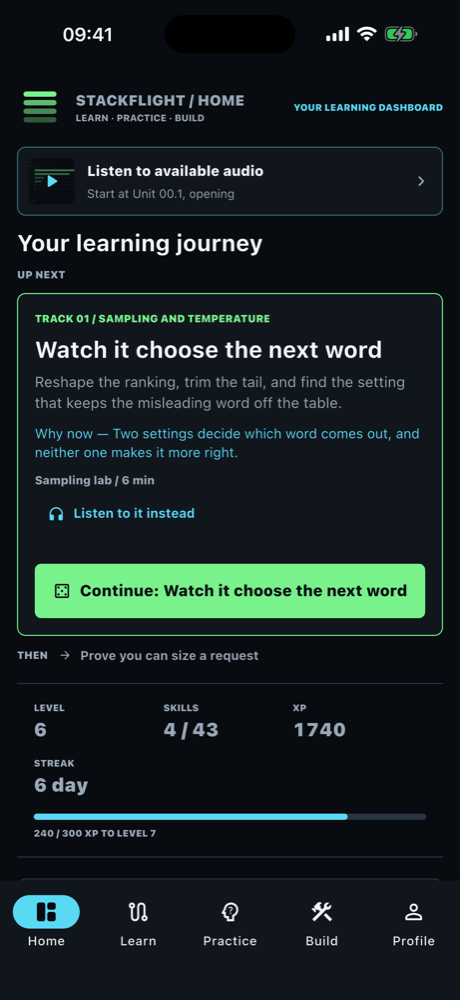
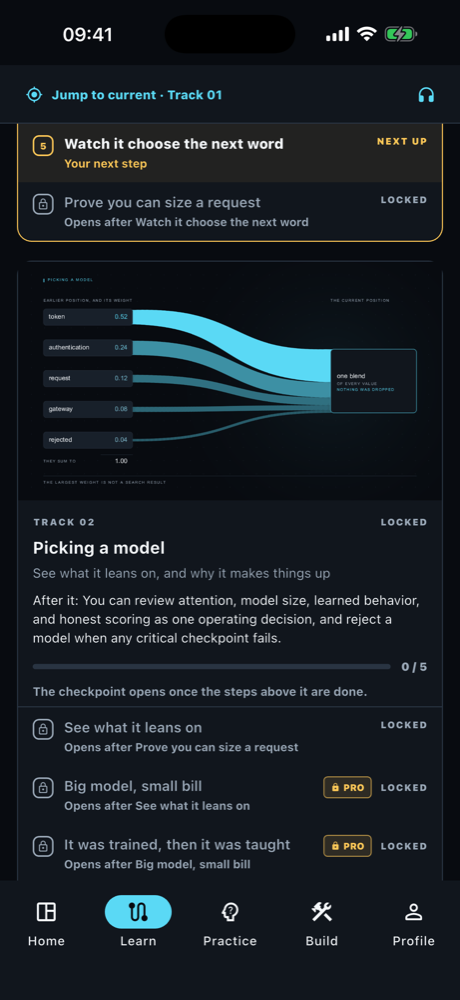
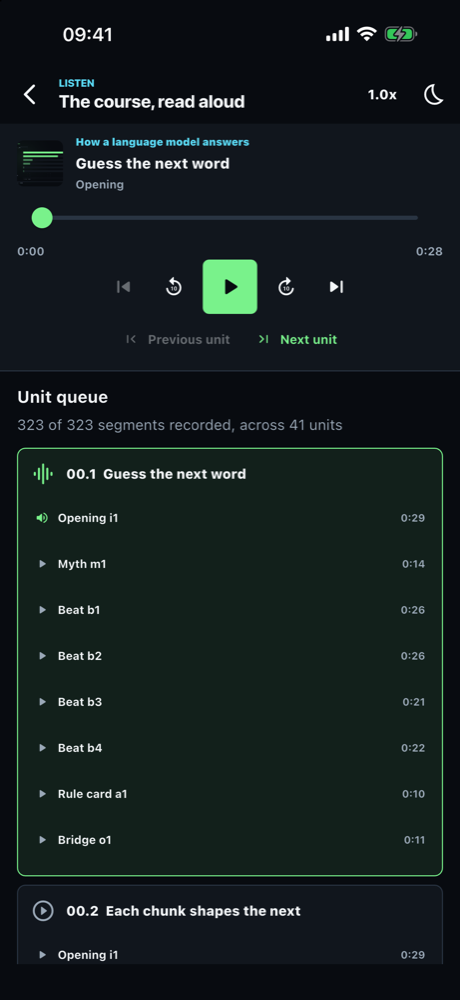
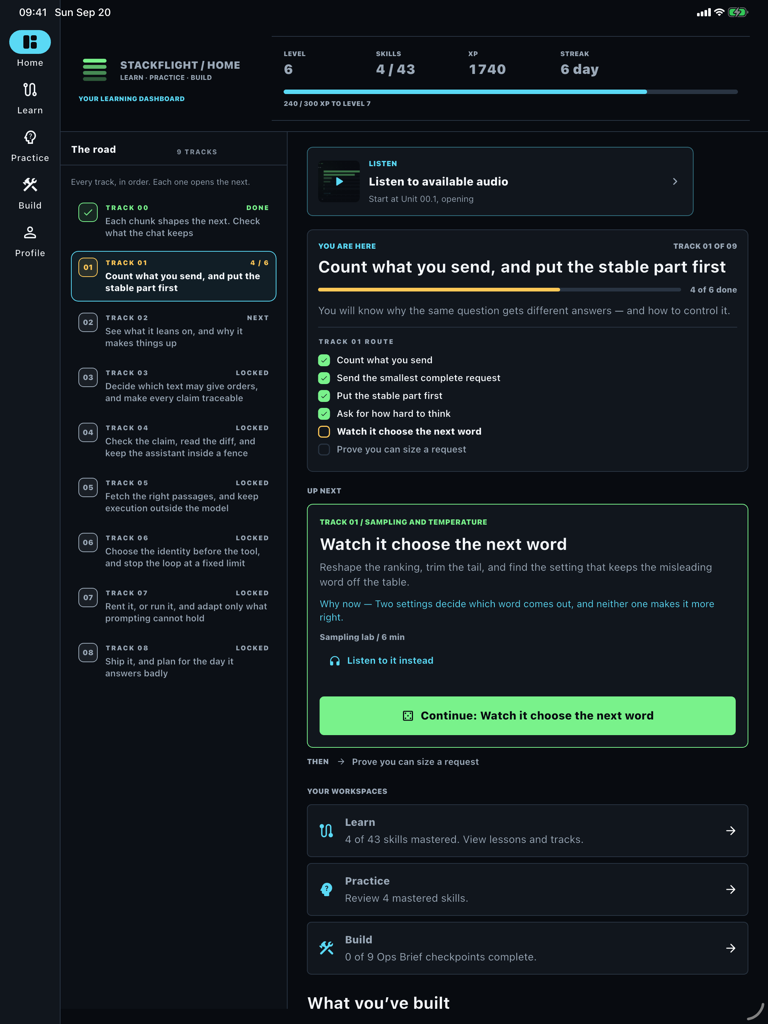
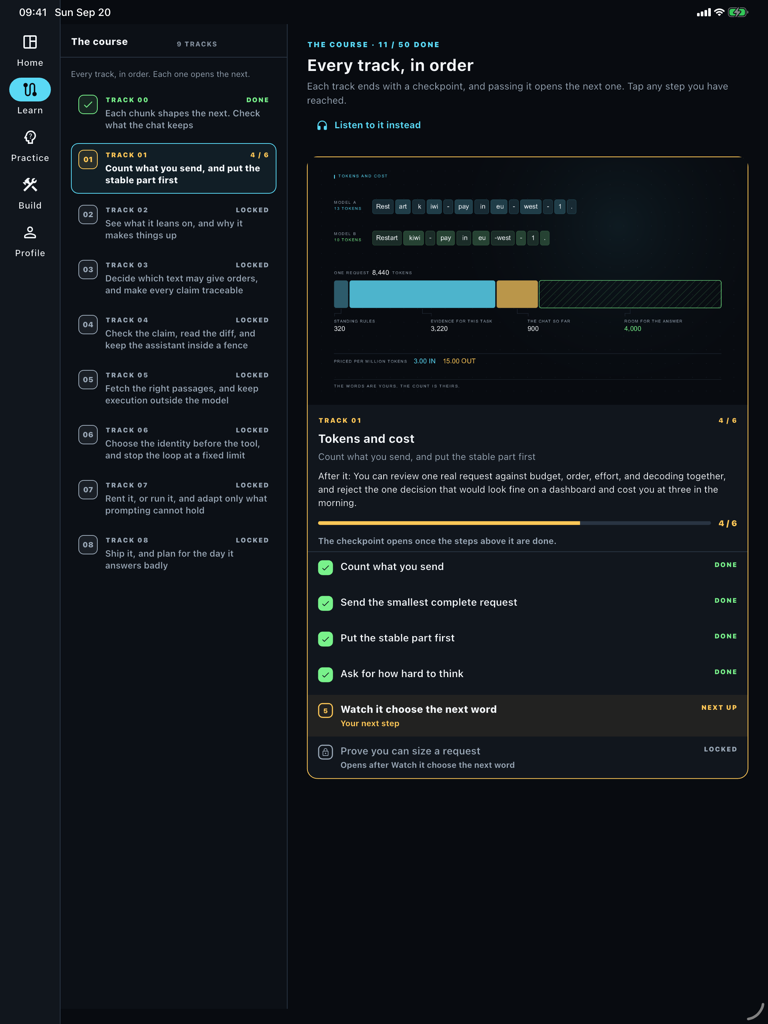
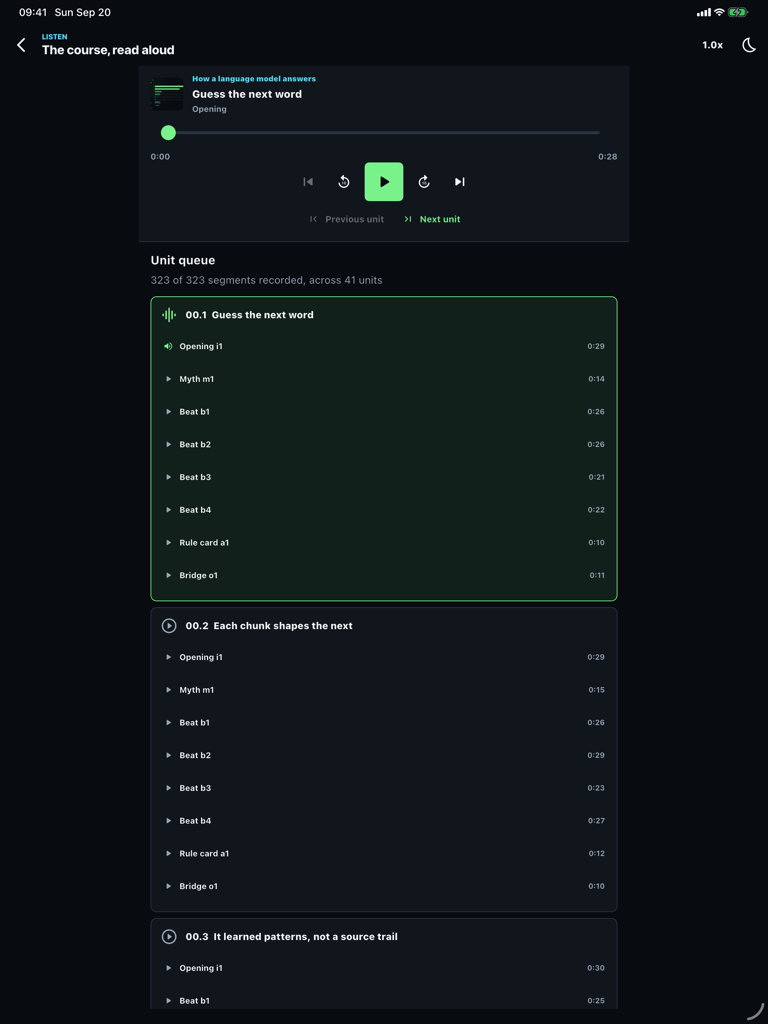
Most explanations of LLMs are either a hand-wave or a research paper. Stackflight is the middle: nine tracks, fifty short units and about three and a half hours of narration that take you from what a token is to why a grounded answer can still be wrong — and what to do about it in the code you actually ship.
- 9 tracks
- 50 units
- 3.5 h narrated
- No account
- No subscription
- Works offline
Android coming soon
It is built the way you would actually learn it.
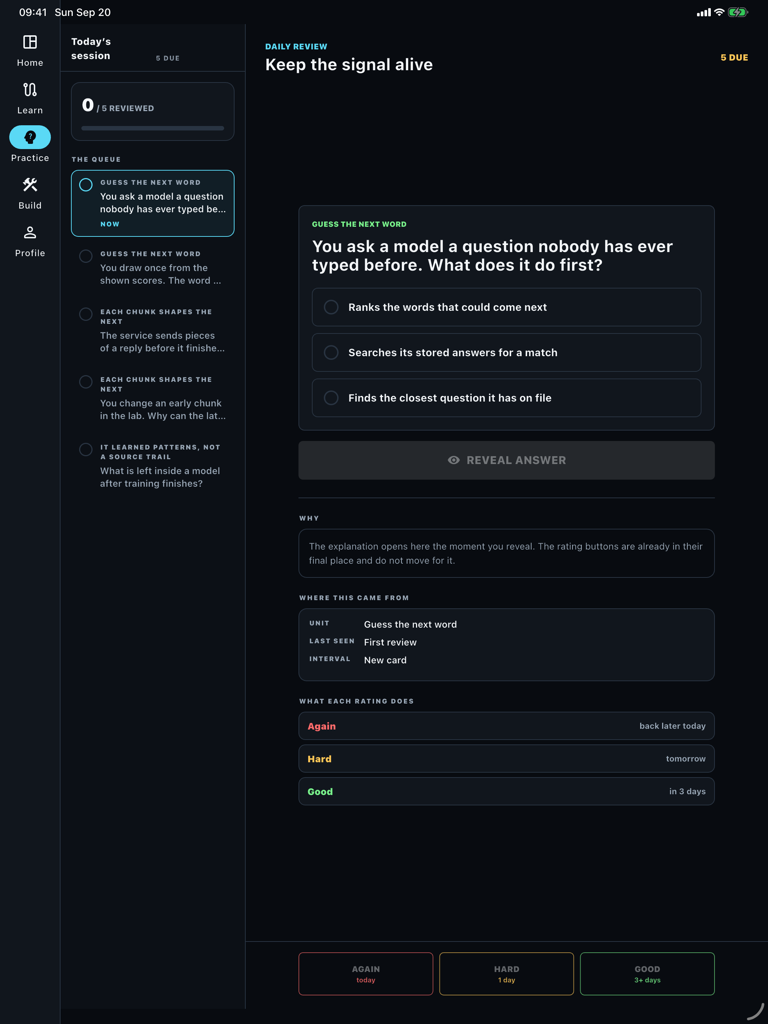
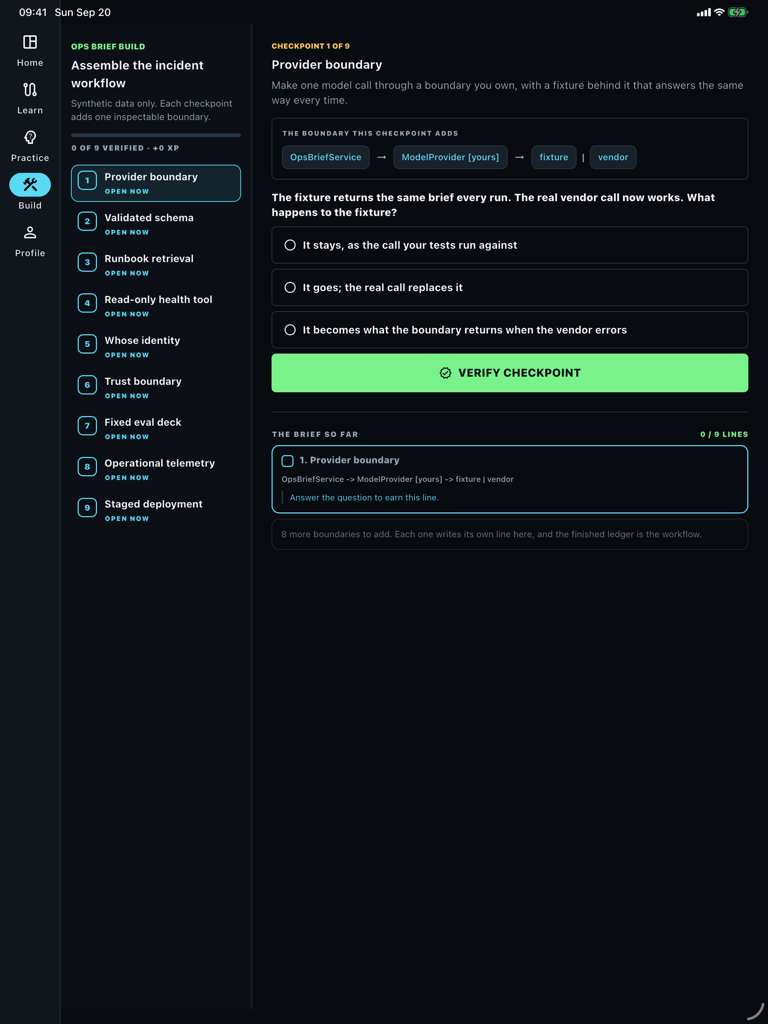
Every unit is the same short loop, because the loop is what makes it stick — not the length of the reading.
Meet the idea
A few paragraphs in plain language. Some units ask you to predict the answer before they explain it, because being wrong first is what makes the explanation land.
Do it yourself
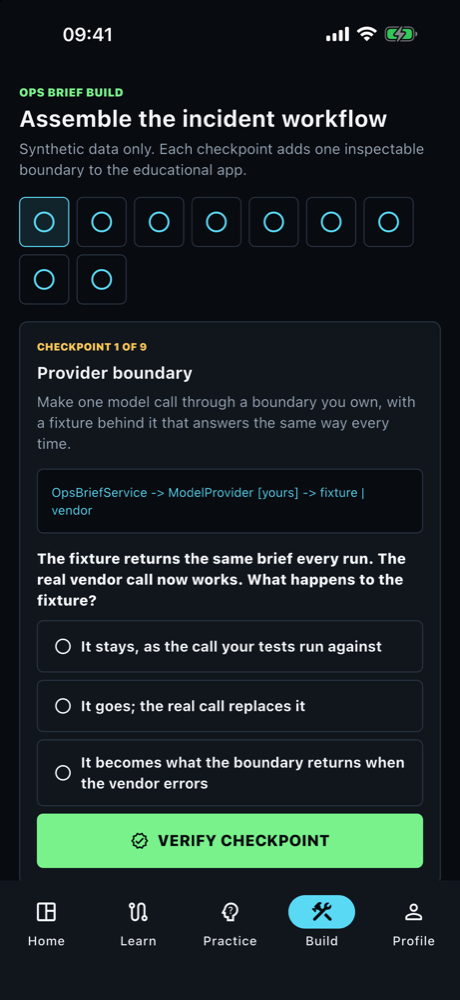
Split a word into tokens by hand. Trace a claim back to its evidence. Decide which text is allowed to give orders. Small hands-on exercises, not multiple choice about a diagram.
Find out if it stuck
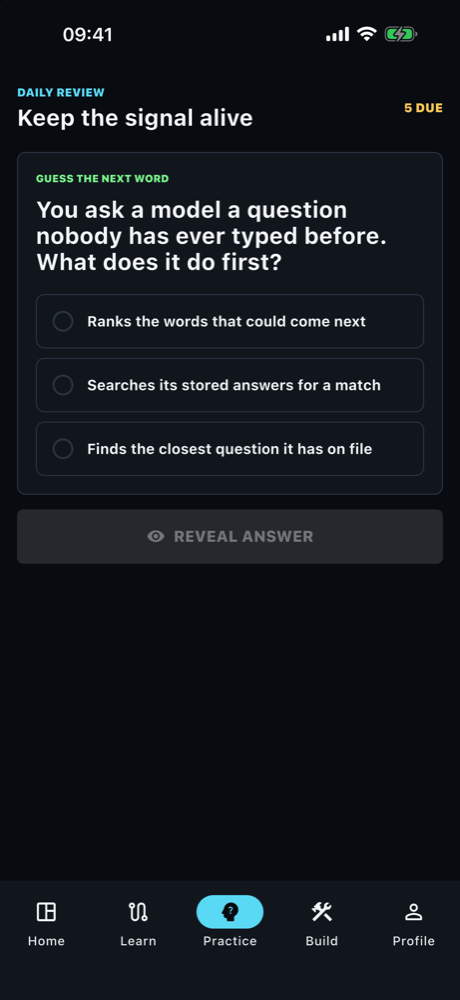
A short check with the reasoning shown for every option, right and wrong. Then it comes back days later, when you are about to forget it.
What you will be able to do by the end.
Count what you send
Tokens, context windows and what they cost — and why putting the stable part of a prompt first is worth real money.
Tell sourced from confident
Trace a claim to evidence or mark it unknown, and recognise the shape of an answer that is fluent and wrong.
Keep a model inside a fence
Decide which text may give orders, get output your code can parse, and stop a loop at a limit you chose.
Ship it, and plan for the bad day
Rent it or run it, adapt only what prompting cannot hold, and have an answer ready for the day it answers badly.
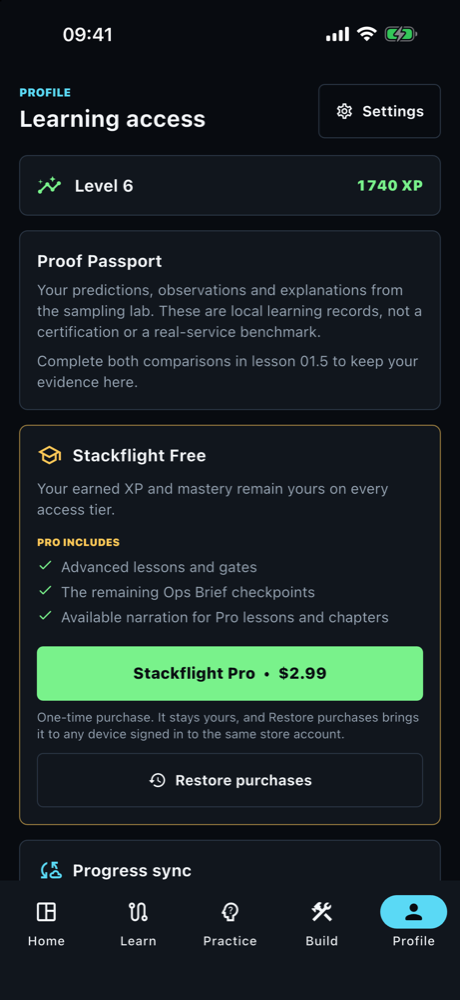
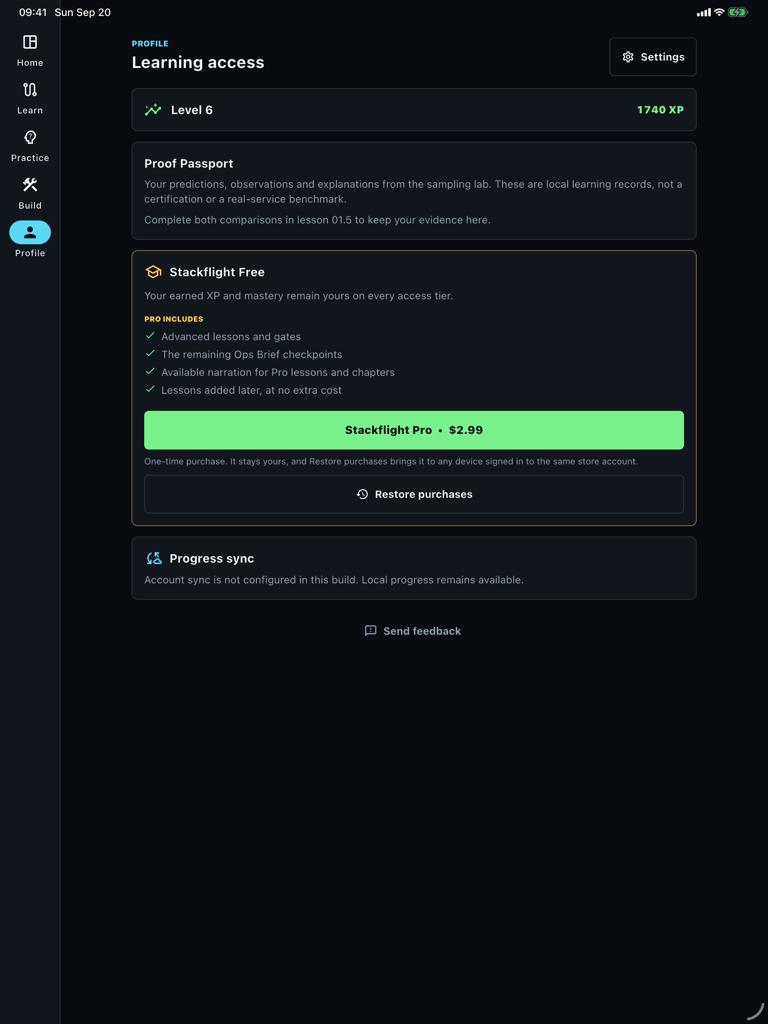
One purchase. That is the whole pricing page.
Stackflight is a finite course. There is no content treadmill to fund, so there is no subscription — a subscription is a promise that more keeps arriving, and here it would just be churn built into the price.
Finished is not the same as frozen. This field moves, and the course moves with it: lessons get corrected, sharpened and added over time. Every update is included in the one purchase — there is never anything further to pay.
$2.99 — launch price, rising to $4.99
- Foundation and all of Track 01 are free, forever. No timer, no quota.
- One payment unlocks the rest of the course, permanently.
- Restorable on any device signed in to the same store account.
- Progress, XP, streaks and spaced practice are free at every tier.
- Later lessons and revisions are included, at no extra cost.
Android coming soon
Nothing about you leaves the phone.
No account, no sign-up, no analytics, no telemetry. Your progress lives on your device. Two things can leave it: a purchase, through Apple and the store SDK that validates it, and — only if you switch it on — a crash report when the app breaks. Both are described in full on the privacy page, which is short because there is little to say.